learnCharacters
How to make an AI bedtime story series with the same character every night
A bedtime story episode as a shot list, the narration word count, one recurring 3D animated cast across episodes, and the credit cost of a 90-second and a 5-minute episode.
by reeldouble · November 3, 2026 · 7 min read
A series, not a story
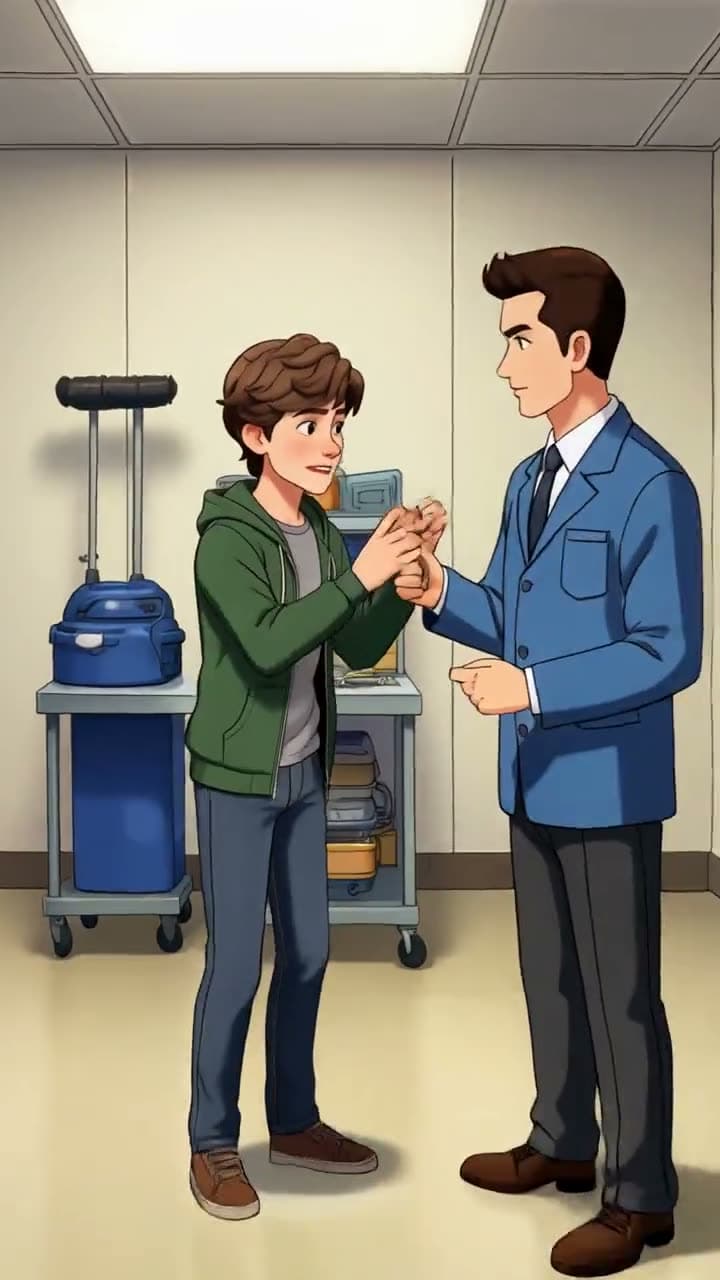
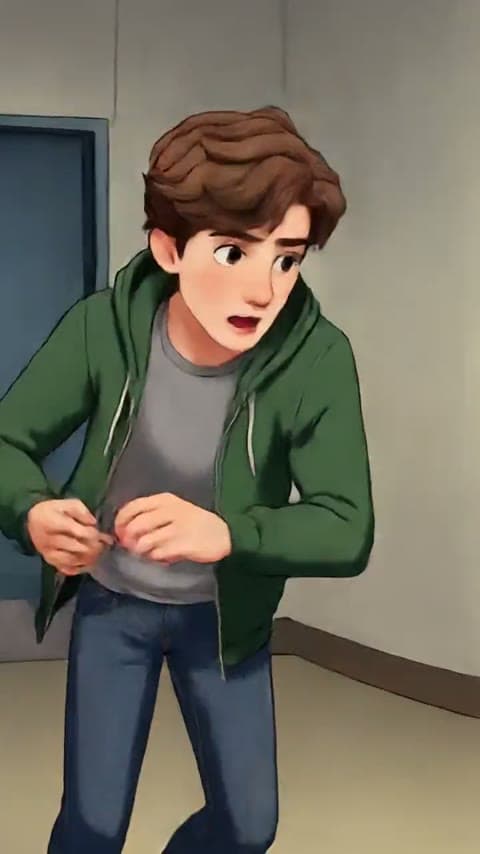
A single AI bedtime story is easy. Write a gentle script, generate some pictures, read it out. The hard part is the second night. Children who liked the sleepy fox on Monday want the same fox on Tuesday, with the same ears, the same scarf and the same voice. Picsart's guide names the problem exactly: ask one prompt for a three-scene bedtime story and you get three drawings of three different children.
Page 1 for this topic is mostly channel-starter guides and tools built around recurring characters. They agree on the principle, lock the character design and keep the narrator. None of them turn an episode into a shot count or say what an episode costs to make, which is what decides whether you can keep publishing every night. Here is how we build one, with the numbers.
How long an episode should be
Guides for bedtime content put the sweet spot at 3 to 6 minutes for young children and 5 to 10 overall; a much-quoted Butlin's survey said 8.6 minutes, though that was a holiday company's marketing poll. For a channel, we work in two sizes:
| format | length | where it goes |
|---|---|---|
| short episode | 60 to 90 seconds | vertical, Shorts, Reels, TikTok, a nightly habit |
| full episode | about 5 minutes | horizontal YouTube, the main video |
The short is where a series finds its audience. The full episode is where it keeps it. Both use the same cast and the same narrator, and the full episode is mostly the short's world, slowed down.
The episode as a shot list
Bedtime pacing is slow. Long holds, slow camera, very little cutting. That suits AI video well, because longer, calmer shots are easier for engines to keep on-model than fast action.
A 90-second short episode in nine shots:
| shot | length | what happens | audio |
|---|---|---|---|
| 1 | 10 s | wide: the forest at dusk, lights in the treehouse | silent, narrated |
| 2 | 10 s | the fox at the window, yawning | silent, narrated |
| 3 | 10 s | the fox walks out onto the branch | silent, narrated |
| 4 | 10 s | the moon rises, the fox looks up | silent, narrated |
| 5 | 10 s | close: the fox says tonight's line | voiced |
| 6 | 10 s | the small adventure: a lost firefly | silent, narrated |
| 7 | 10 s | the fox helps it home | silent, narrated |
| 8 | 10 s | close: the fox says goodnight | voiced |
| 9 | 10 s | the treehouse light goes out | silent, narrated |
Seven narrated shots, two where the character speaks on camera. The narrator carries the story; the character speaks twice, the same two beats every night: a line in the middle and goodnight at the end. Repetition is a feature in bedtime content. Children come back for the ritual.
Narration: write it slow
Brisk narration runs about 2.5 words a second. Bedtime narration should be slower, and we write it at about 2 words a second with longer pauses between shots. That gives roughly 20 words for a 10-second shot and about 140 words for the 90-second episode once you subtract the two voiced shots.
Write the narration into the shot list, one short paragraph per shot, rather than writing a story and cutting shots to fit. If the draft runs to 250 words, the episode is two and a half minutes, not ninety seconds. Our script length per shot page has the full table.
Keeping the cast the same every night
Three things carry the character from episode to episode:
One reference set, made once. Build a character sheet of the fox from the front, three-quarter and side, plus two or three expressions, in neutral light. In our studio a drawn sheet is 30 credits, and that sheet is the character for the life of the series. A character reference sheet covers how to build one that holds.
One frozen description. The fox's description, ears, fur colour, the scarf and its exact colour, goes into every prompt word for word. Never retype it.
One engine for the series. Different engines draw the same references differently. Pick the one that looks right for your 3D animated style in the first episode and stay on it. Switching mid-series is the fastest way to a fox that looks like a cousin.
Each episode after the first starts from the previous one. In ReelDouble, Part 2 inherits Part 1's characters and references, so episode 12 uses exactly the same fox as episode 1 without you rebuilding anything. Our Part 2 guide covers what carries over.
The voice. The narrator and the fox's two lines need the same voices every night. Pick a voice for the fox once and reuse it; a cloned voice is 50 credits once per character and reused on every render after that. Same voice across episodes has the detail.
What an episode costs
The 90-second short above, at 720p, on the engines we use for 3D animated stories:
| engine | how | credits |
|---|---|---|
| Kling O3 Pro | 7 silent shots at 240, 2 voiced at 300 | 2,280 |
| Kling O3 Pro, all voiced | 9 voiced shots at 300 | 2,700 |
| Veo 3.1 Fast | 12 silent shots of 8 s with references, at 160, trimmed to 90 s | 1,920 |
| Seedance 2.5 | three 30-second takes, sound included | 6,300 |
A few things that table hides:
Kling O3 Pro mixed is our default for bedtime. Long silent shots at 24 credits a second with the narrator on top, voiced only where the fox speaks. It takes five character elements, enough for the fox and two friends.
Veo 3.1 Fast is the cheapest, but with references attached every shot is exactly 8 seconds, so the nine 10-second beats become twelve 8-second shots. And Veo takes three references, which is tight for a cast.
Seedance 2.5 bills sound whether you use it or not, so it costs nearly three times as much here. It earns its price when you want a single long, unbroken take, up to 30 seconds, or a big cast: thirty reference images.
The 5-minute full episode is about 30 shots of 10 seconds. On Kling O3 Pro with 24 narrated shots and 6 voiced ones, that is 5,760 plus 1,800: 7,560 credits. Retakes come on top; on a series where the cast is already locked, we budget about one retake in every five shots.
The nightly routine
Once the cast exists, an episode is a routine:
- Write tonight's small adventure as a nine-shot list, same opening and closing beats as every episode.
- Write the narration into the list at 2 words a second.
- Start tonight's episode as the next part of last night's, so the cast carries over.
- Render the seven narrated shots silent and the two speaking shots voiced.
- Export, lay the narration under it, add a soft music bed.
On YouTube, children's content has to be marked as made for kids in the upload settings; that changes what the video can do (no personalised ads, comments off), and it is a legal requirement, not a choice.
We built the studio for exactly this kind of series: the cast is saved once, every new part inherits it, and the quote for each shot is on screen before you render it.
FAQ
How do I keep the same character in every AI bedtime story episode?
Make one reference sheet of the character, keep its description word for word in every prompt, and stay on one engine for the whole series. In ReelDouble, each new part inherits the previous part's characters, so the cast carries over automatically.
How long should an AI bedtime story video be?
Most guides say 3 to 6 minutes for young children and 5 to 10 overall. For a channel, a 60 to 90 second short works for Shorts and Reels, with a full episode of about 5 minutes for YouTube.
How much does it cost to make an AI bedtime story episode?
On ReelDouble, a 90-second episode at 720p on Kling O3 Pro, narrated over silent shots with two voiced lines, is about 2,280 credits. A 5-minute episode built the same way is about 7,560 credits before retakes.
How many words of narration fit in a bedtime story video?
Bedtime narration should be slow, about 2 words a second. That is around 20 words for a 10-second shot and roughly 140 to 180 words for a 90-second episode, depending on how many shots the character speaks in.
Which AI video engine is best for a 3D animated bedtime series?
On ReelDouble we default to Kling O3 Pro for bedtime series: silent shots are 24 credits a second for narration and it takes five character elements. Seedance 2.5 suits long single takes or bigger casts but costs more.