learnGetting started
AI video hook: render the first 3 seconds as their own clip, and what a retake costs
Why we render the hook of an AI video as its own 4-second clip: the frame, the camera move, the 7-word line, which engine to use and what three hook takes cost.
by reeldouble · October 30, 2026 · 7 min read
Everyone tells you the hook matters. Nobody tells you how to render one.
Every guide to short-form video says the same thing: the first one to three seconds decide whether someone keeps watching. Then they hand you a list of hook lines. "Nobody tells you this about…", "I tried X for 30 days…". That is fine advice for someone filming themselves on a phone, where the hook is just the first thing you say.
With AI video the hook is not a line. It is a rendered clip, with a length, an engine, a camera move and a price. And it is the clip most likely to need a retake, because it is the one you will judge hardest. The guides on page one do not deal with any of that. This page is how we build the opening of every reel we make.
The rule: the hook is its own clip
We never render the hook as the first seconds of a longer clip. If the opening of a 12-second shot is weak, the only fix is to render all 12 seconds again, and the next take may lose the parts that worked.
So the first shot of every piece is a separate clip, as short as the engine allows. The body of the video starts at the cut. If the hook does not land, we retake 4 seconds, not 12.
The shortest hook you can render is 4 seconds
The phrase is "the first 3 seconds", but no engine on our shelf bills less than 4 seconds, and none renders a 3-second clip. Veo 3.1 Fast serves only 4, 6 or 8 seconds; Kling and Seedance start at 4. So the hook clip is 4 seconds. If you want it to feel like 3, trim it in the edit; you still pay for 4.
What fits in 4 seconds:
- One line of about 7 words. At a brisk 2.5 words a second, with half a second of air at each end, 3 usable seconds holds about 7 words. "My sister sold my car this morning." is seven.
- One camera move. A push-in, a whip, a reveal. Not two.
- One subject. One face or one object the eye goes to in the first frame.
The first frame has to make sense on its own
One guide we read puts it well: if the first frame only makes sense after three seconds of motion, it is not a hook. A viewer scrolling decides on a still image before the clip has moved. That changes how we write the hook prompt:
- Start on the subject, close. Describe what fills the frame at frame one: "close-up of the woman's face, eyes wide, holding car keys". Not "a woman walks into her driveway".
- Put the motion after the image. "Camera pushes in slowly as she speaks." The move adds energy; it does not reveal the subject.
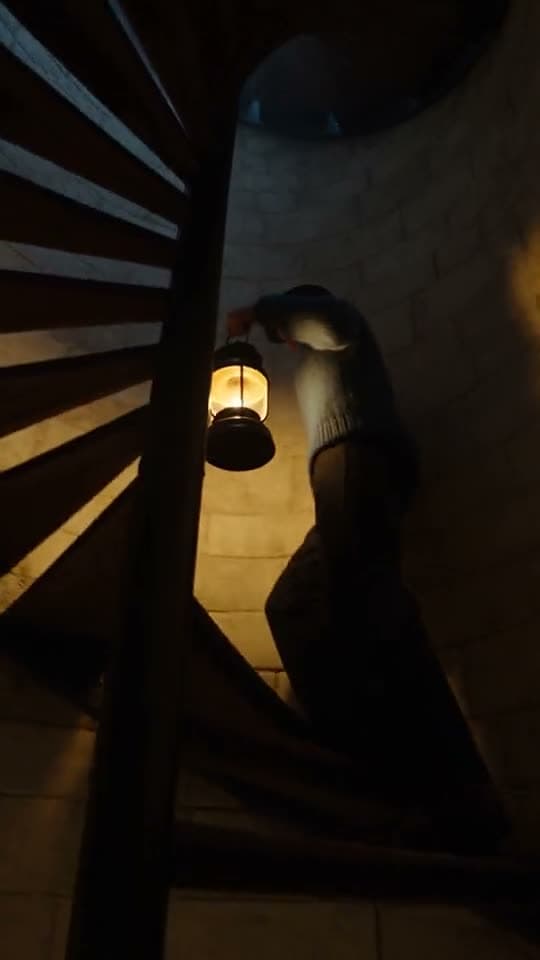
- Light it to read on a phone. High contrast, one bright area where the eye should go. The cover frame on this page is a hook we use for exactly this reason: a lit corridor of lanterns pulls the eye straight down the frame.
Our camera movement prompts guide has the moves that fit inside one short shot.
Which engine for the hook
Here is what a 4-second hook costs on every engine on our shelf:
| engine | resolution | 4 s silent | 4 s voiced | note |
|---|---|---|---|---|
| Veo 3.1 Fast | 720p or 1080p | 80 | 120 | with a character reference, billed as 8 s: 160 silent, 240 voiced |
| Kling O3 Pro | 720p | 96 | 120 | up to 5 characters, no change in price |
| Seedance 2.0 | 480p | 88 | 88 | same price voiced or silent |
| Seedance 2.0 Fast | 480p | 100 | 100 | |
| Seedance 2.5 | 720p | 280 | 280 | up to 30 characters |
How we choose:
- The hook is a recurring character speaking: Kling O3 Pro, 120 credits. It is the cheapest voiced hook with a locked face, because Veo bills any reference render at 8 seconds.
- The hook is a place or an object, no character: Veo 3.1 Fast silent at 80 credits, or voiced at 120 if the line is spoken over it.
- The hook is pure motion, a chase, a crash, a transformation: Seedance 2.5 at 280. It is the dearest by far, so we draft at Seedance 2.0 480p (88) first, then finish the keeper.
Budget three takes, not one
A body shot gets one attempt and half a retake in our budgets. A hook gets three takes, every time, because it is the shot whose quality is hardest to predict and that matters most.
| hook | one take | three takes |
|---|---|---|
| Kling O3 Pro, voiced | 120 | 360 |
| Veo 3.1 Fast, silent, no character | 80 | 240 |
| Seedance 2.5, 720p | 280 | 840 |
Three Kling hooks cost 360 credits, which is exactly what a single 12-second voiced Kling clip costs. That is the trade we make every time: for the price of one body shot, we get three versions of the only shot that decides whether the body is seen at all.
The three takes are not the same prompt three times. We change one thing each time:
- Take A: the line as written, the planned camera move.
- Take B: the same line, a different first frame: closer, or from another angle.
- Take C: a different line with the same picture: the twist first instead of the setup.
Then we cut all three onto the same body and watch them back to back on a phone. One is nearly always obviously better.
Hook lines that work as rendered clips
Lines that need no setup and fit in seven words:
| type | example (7 words or fewer) |
|---|---|
| the worst moment | "She sold my car this morning." |
| the number | "I spent 300 credits on this hook." |
| the wrong assumption | "Everyone thinks the dog did it." |
| the direct question | "Would you forgive your brother for this?" |
| the reveal | "This is not a real bakery." |
Lines that do not work as a hook clip: anything that needs a name first ("So my friend Dave…"), anything that is background ("Some context…"), and anything over about 10 words. Over that, the character has to speak too fast to be understood.
How the hook joins the body
The cut from hook to body is where many AI videos lose the viewer a second time, because the character, the light or the costume jumps. Three habits we keep:
- Same character sheet on both sides of the cut. The hook and the body use the same references, so the face does not change.
- End the hook on a held beat. The last half second of the hook should be still. A cut on movement looks like a glitch; a cut on a held look looks like an edit.
- Match the light in the prompt. Copy the lighting sentence from the hook prompt into the first body shot word for word.
Measure it
Instagram and TikTok both show where viewers drop off in their retention graphs. If the curve falls steeply in the first two seconds, change the hook and leave the body alone: that is the whole point of rendering it separately. Swapping a hook on a finished reel costs 120 credits on Kling, not a full re-render.
If you have a reel whose opening is not landing, set up the first shot alone in the studio and render three takes of it. A free account starts with 300 credits, which covers two voiced Kling hook takes with 60 to spare.
FAQ
How long should an AI video hook be?
The hook is the first one to three seconds of a reel, but AI engines bill at least 4 seconds. On ReelDouble we render the hook as its own 4-second clip with one line of about 7 words and one camera move.
How much does an AI video hook cost to render?
On ReelDouble a 4-second hook costs 120 credits voiced on Kling O3 Pro, 80 credits silent on Veo 3.1 Fast without a character, or 280 credits on Seedance 2.5 at 720p.
Should I render the hook separately from the rest of the video?
Yes. Rendered separately, a weak hook can be retaken for the price of 4 seconds instead of the whole shot. ReelDouble lets you render the hook and body as separate scenes and cut them together.
How many words fit in a 3 second hook?
About 7 words at a brisk 2.5 words a second, leaving half a second of air at each end of a 4-second clip. More than about 10 words makes the character talk too fast to follow.
Which AI video model is best for hooks?
For a recurring character speaking, Kling O3 Pro is cheapest on ReelDouble at 120 credits for 4 seconds. For a place or object with no character, Veo 3.1 Fast silent is 80. For big motion, Seedance 2.5.